 Nusan
Nusan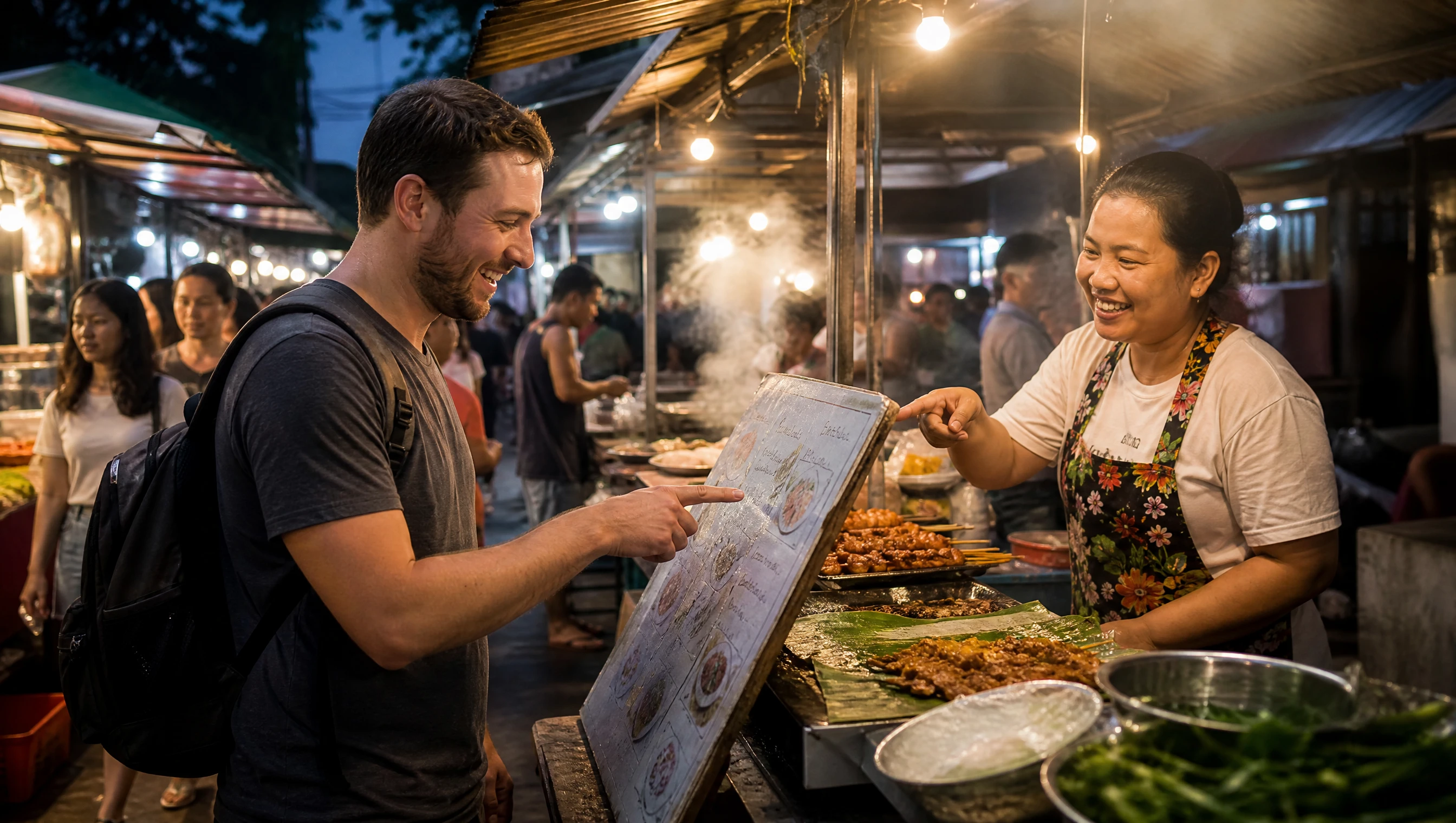
The menu board problem
Most street stalls in Thailand don't have English menus. What they have is a laminated board, hand-painted signage, or a chalk list — all in Thai script — hung above a grill that's already drawing a line of hungry locals. Pointing at random and hoping for the best works occasionally. It also occasionally gets you a plate of something you didn't expect.
The good news: you don't need to learn to read Thai to order well. You need two things — a way to read the board, and a few spoken phrases for the details a photo can't capture (how spicy, no peanuts, takeaway).
Reading the board: point your camera, not your finger
This is where camera translation earns its keep. Instead of guessing, point your phone's camera at the menu board and the text translates in place, overlaid on the dishes as you look at them. You get the name of each dish, sometimes a general idea of what's in it, and — just as importantly — you can finally tell the noodle soups apart from the stir-fries.
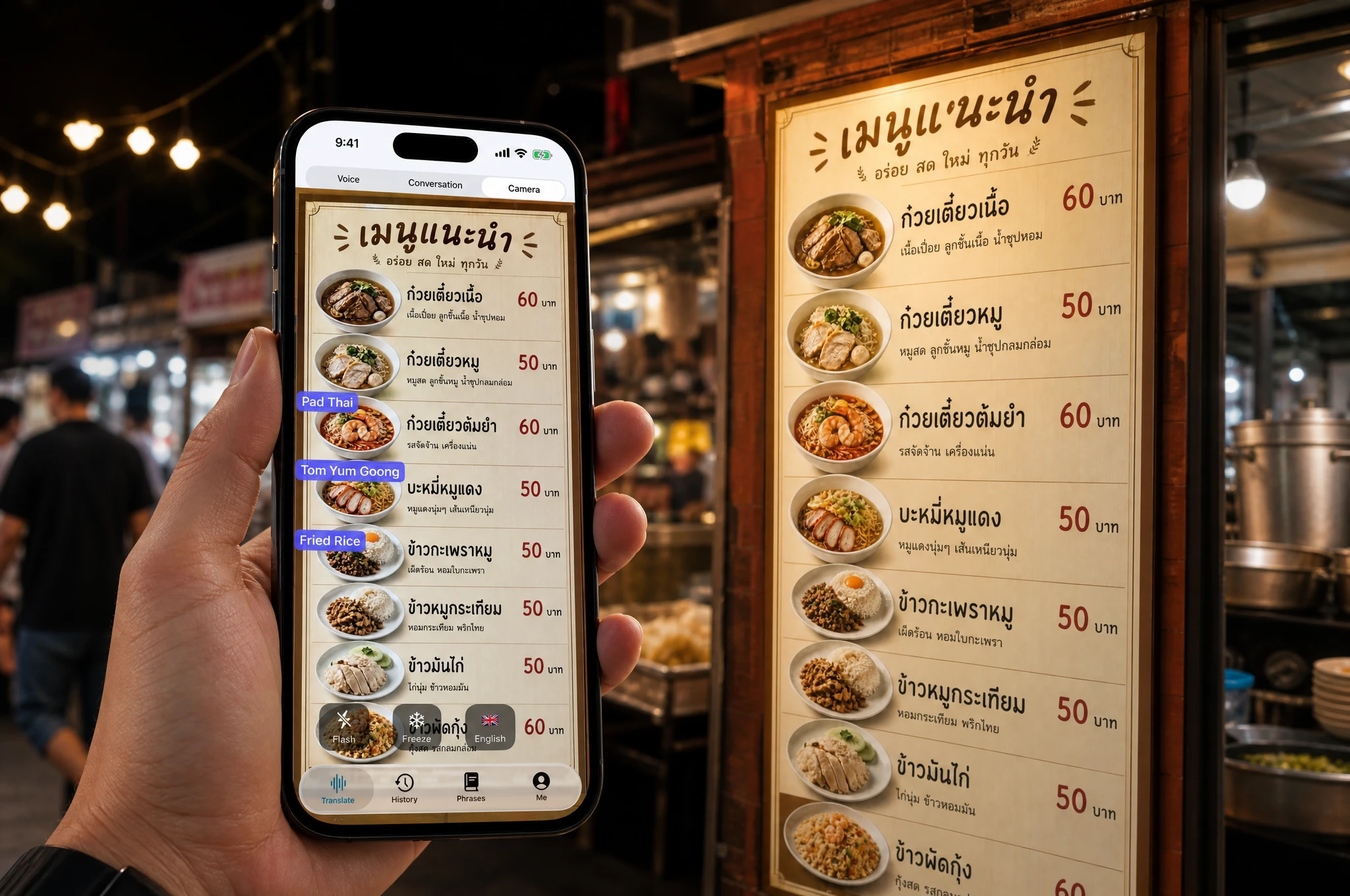
It's especially useful for the handwritten specials boards that change daily, which a static translated menu or a phrasebook could never keep up with.
What to actually say out loud
A handful of spoken phrases cover almost every ordering situation:
- "Is this spicy?" — Thai food's heat can vary wildly by stall. Asking first saves you from a dish you can't finish.
- "Not spicy, please." — Worth saying even if you like heat a little; "mild" by Thai street-food standards can still be a lot.
- "One of this, please" — while pointing at the dish, useful when a name is hard to pronounce.
- "No peanuts / no fish sauce" — for allergies or preferences, said before the dish is cooked.
- "For here or to go?" — usually asked of you, so it helps to recognize it and have "to go" ready.
Speaking these into a voice translator gets them said in natural Thai, spoken aloud through your phone, so the vendor hears a normal sentence rather than a robotic phrase — and you don't have to attempt the pronunciation yourself under pressure with a line building behind you.
When the vendor talks back
Ordering is only half the conversation. The vendor might ask a clarifying question — spice level, add an egg, extra portion — and voice translation works both ways: they speak into the phone, you hear the translation in your earphones or from the speaker. No app switching, no changing languages manually mid-exchange, since good voice translation auto-detects which language is being spoken.
A simple ordering routine
- Point the camera at the board to see what's on offer and pick a dish.
- Say "one of this, please" while pointing, or say the dish name if you caught it from the translation.
- Ask about spice level if it matters to you.
- Mention any allergy or dislike before they start cooking.
- Listen for their reply — hold the phone up if they ask something back.
None of this requires memorizing Thai. It requires a phone, working translation, and a willingness to point at food and smile — which, honestly, is most of what ordering street food is about anyway.