 Nusan
Nusan
Why Thai pronunciation trips people up
Thai is a tonal language — the same syllable said with a different pitch pattern can mean a completely different word. It also uses its own script, so there's no shortcut through reading signs the way you might muddle through French or Spanish with Latin-alphabet familiarity. Between the tones and the script, most visitors give up on speaking anything beyond "hello" and "thank you."
That's a shame, because a few correctly pronounced words — even imperfectly toned — get a noticeably warmer reaction from locals than a phone screen held up in silence.
You need romanization of the translation, not just the original
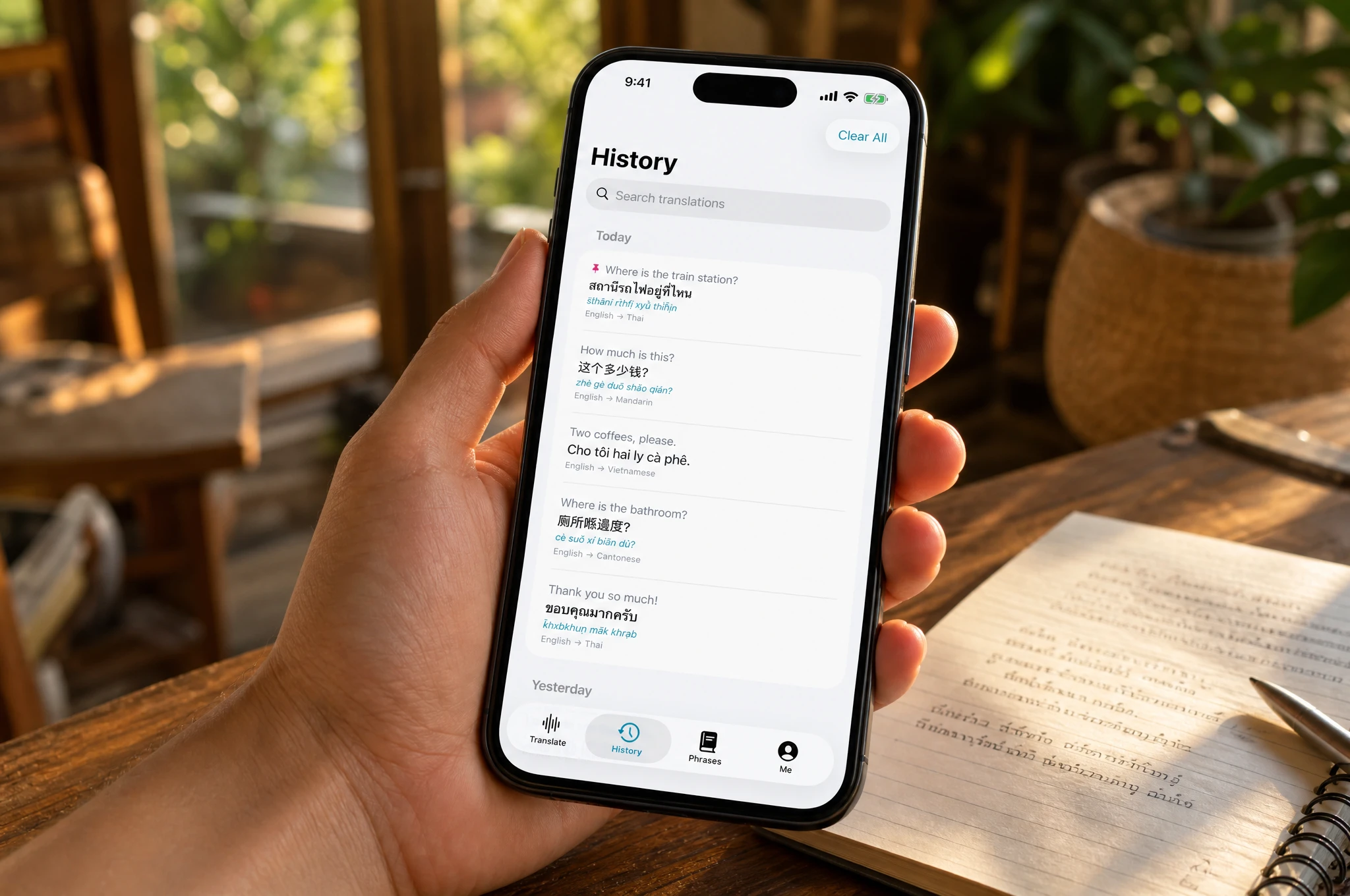
Here's the detail most phrasebooks and apps get wrong: they'll translate "thank you" into Thai script (ขอบคุณ) and stop there. That's correct, but useless if you can't read Thai. What you actually need is a romanized, phonetic version of the translated text — something like khàawp-khun — so you can sound it out immediately, without learning the script first.
This sounds like a small distinction, but it's the difference between a translation you can only show someone and one you can actually say yourself.
A fast practice routine that actually works
- Pick five phrases you'll use constantly — hello, thank you, how much is this, delicious, no spicy — not fifty. Five that you actually say every day cover more real conversations than fifty you half-remember.
- Say them out loud, not just read them. Translate the phrase, get the pronunciation guide, and repeat it aloud a few times immediately. Reading silently doesn't build the muscle memory; saying it does.
- Listen to it spoken back. A translator that reads the translation aloud gives you a model to match — tone included — which a written romanization alone can't fully capture.
- Use it the same day. Order something, thank a vendor, ask a price — the phrase you use once in a real exchange sticks far better than one you only rehearsed.
- Let repetition do the rest. By day three or four of actually using the same five phrases, they stop requiring the app at all.
Where this matters beyond Thai
The same problem exists for Mandarin and Cantonese — both use Chinese characters, both are tonal, and both benefit enormously from seeing a romanized pronunciation alongside the translation rather than script alone. Vietnamese, by contrast, already uses a Latin-based alphabet with tone marks, so the barrier is smaller but the tones still matter for being understood.
The goal isn't fluency, it's five good phrases
Nobody expects a two-week trip to produce a fluent Thai speaker. What's realistic — and what actually changes a trip — is being able to greet someone, thank them, and ask a price without reaching for your phone every single time. A pronunciation guide gets you there faster than a phrasebook, because it teaches you to say the words instead of just showing you what they look like.