 Nusan
Nusan
What conversation mode actually solves
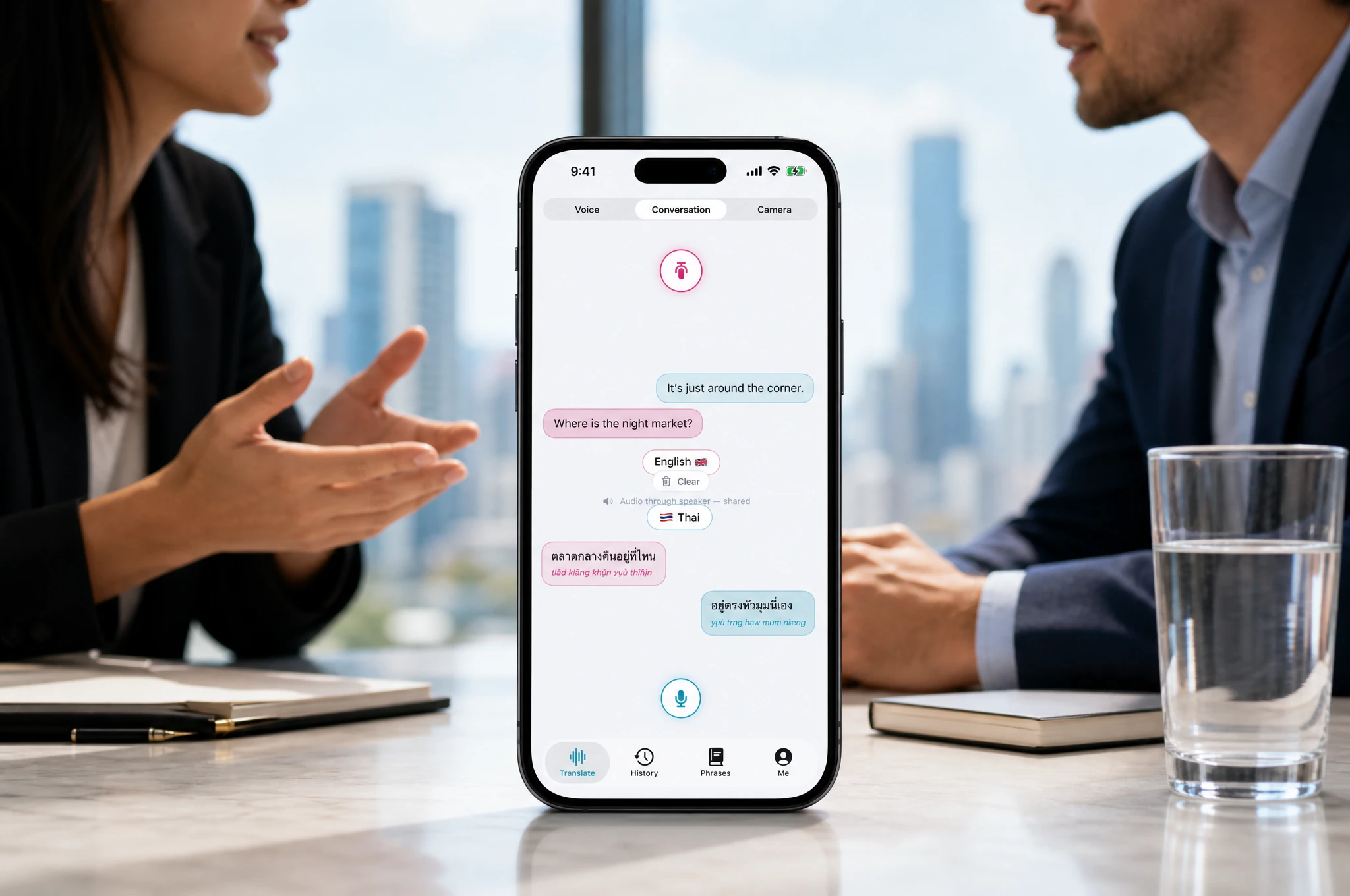
Voice translation for one speaker is straightforward: you talk, it translates, done. A real meeting isn't one-directional — it's back and forth, often quickly, sometimes with both people talking over each other slightly the way normal conversations do. Conversation mode is built for that specific shape: two people, one phone, each speaking their own language, with the app handling which direction to translate based on who's speaking and detecting the language automatically rather than requiring a manual switch every time someone else starts talking.
Where this fits in an actual meeting
- Supplier and factory visits. Walking a production floor with a manager who doesn't speak your language — quick questions and answers, not a scripted presentation, are exactly what benefits from real-time back-and-forth.
- Onboarding a local hire. The first few weeks with a new team member often involve a lot of small clarifying questions that don't warrant booking an interpreter but do need to be precise.
- Client relationship conversations. The parts of a business relationship that happen over a meal or between formal agenda items — these are often where trust actually gets built, and they rarely have an interpreter present.
- Site visits and inspections. Pointing at equipment, asking about a process, getting a direct answer without waiting for a scheduled call with an interpreter.
What it isn't a replacement for
Legal contract negotiations, regulatory filings, or anything where a mistranslation carries real financial or legal risk still call for a professional human interpreter or certified translation. Conversation mode is built for operational, everyday business communication — the volume of small exchanges that make up most of actually working with people across a language gap — not for the handful of high-stakes moments that deserve dedicated expert support.
Practical tips for using it in a meeting
- Set the phone where both people can see and reach it — usually flat on the table between you, screen up.
- Speak in complete thoughts, then pause — this keeps translations clean and gives the other person a clear turn.
- Keep a notebook for numbers and names — spoken translation is excellent for conversation, but confirm critical figures (prices, dates, quantities) in writing as a habit, the same way you would in your own language.
- Use it to build rapport, not just transact — small talk translates too, and it's often what actually strengthens a business relationship.
The bigger picture
A lot of cross-border business in Southeast Asia happens at a scale and pace that doesn't justify hiring interpreters for every interaction, but still deserves accurate, natural communication rather than stilted phrasebook English. Conversation mode sits in that gap — good enough for real relationship-building and day-to-day operations, with the judgment to know when a situation has moved beyond what any translation tool should handle alone.