 Nusan
Nusan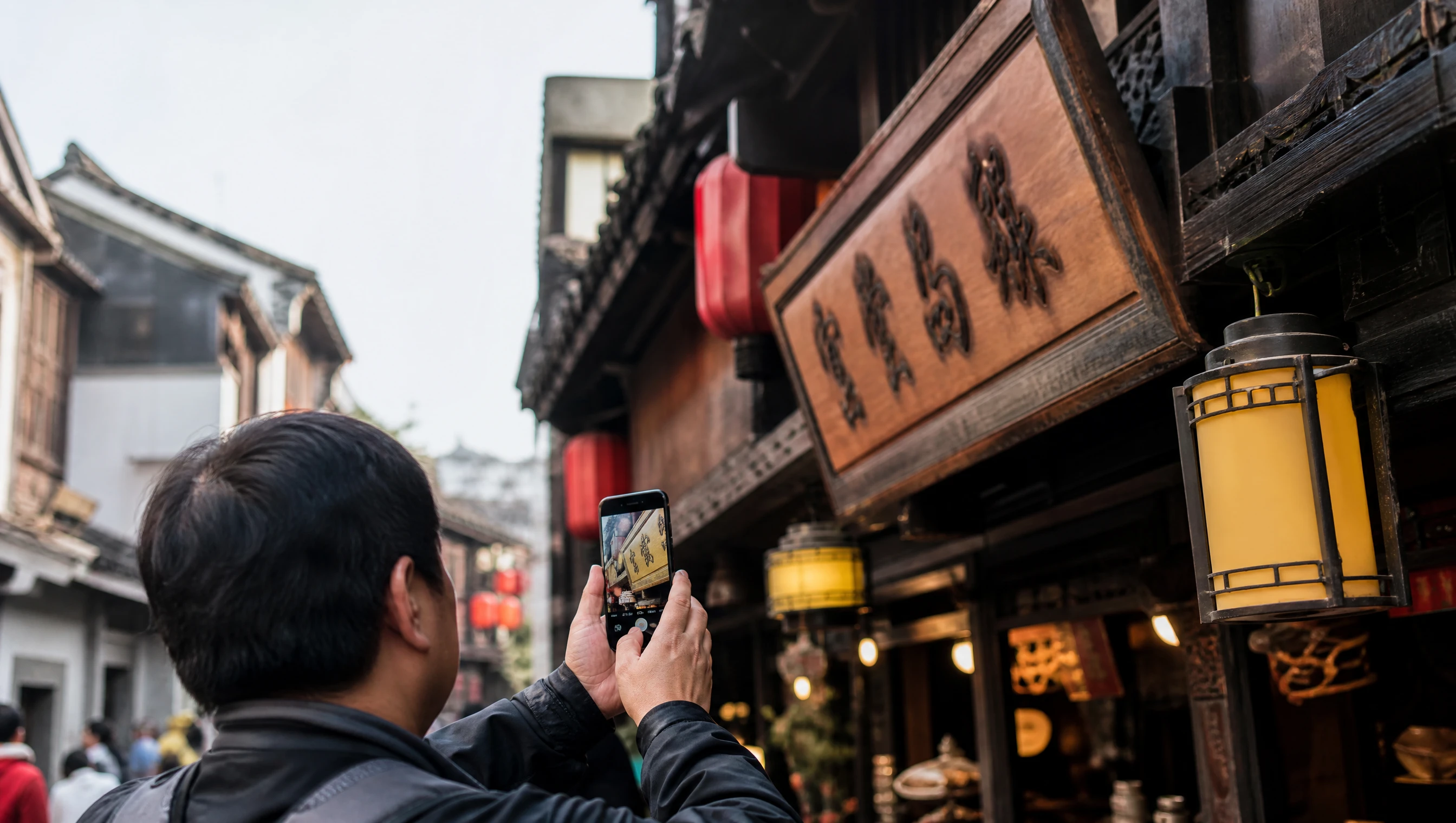
Why written text is the bigger problem, not speech
Conversations are occasional. Signs are constant. Between arriving at an airport and getting to a hotel, a traveler passes dozens of pieces of written information — directions, warnings, restaurant names, transit boards — almost all of it untranslated and, in much of Southeast Asia, in a script that can't be typed on a standard phone keyboard even if you wanted to. Camera translation exists specifically for this: point, and the text on the screen appears translated in place, without ever needing to type a character of a language you can't input.
How it actually works
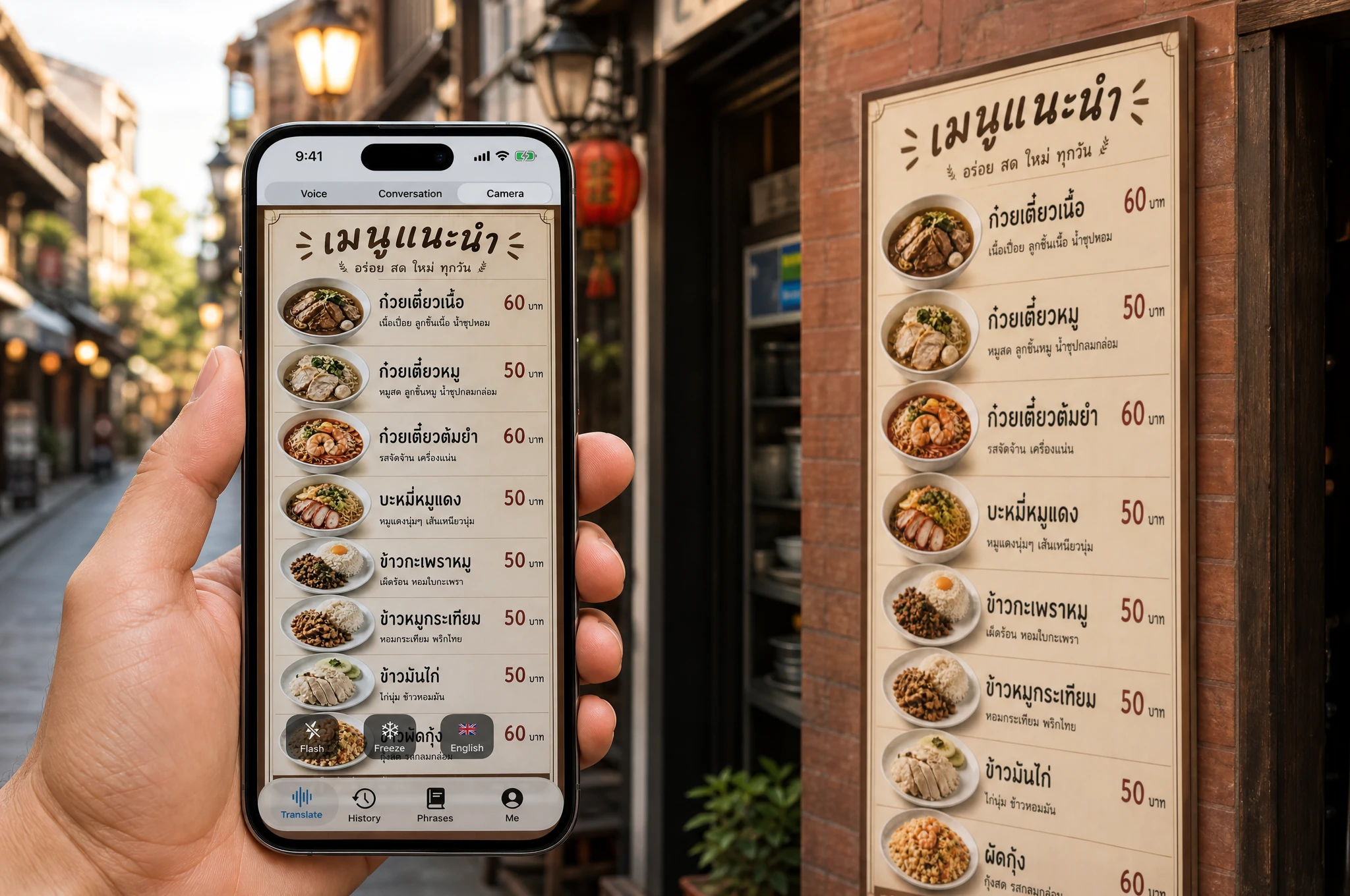
The camera captures the text in the frame, on-device text recognition identifies the characters (whether Latin, Thai script, or Chinese characters), and translation overlays the result directly over the original — so you see a menu that reads in your language while still looking like the menu, rather than a separate block of translated text disconnected from the layout.
This matters more than it sounds: a translated menu that keeps its original structure (dish name, price, description in roughly the same spot) is far easier to actually use while ordering than a flat list of translated sentences in a different order.
Where it's most useful
- Restaurant menus — especially handwritten specials boards that a static translation could never anticipate.
- Street and shop signs — knowing what a storefront actually sells before walking in.
- Transit and directional signage — train platforms, bus stop names, exit signs in a station.
- Product labels and price tags — useful for anything from a pharmacy to a convenience store.
- Warning and safety signs — worth reading properly rather than guessing from context.
What to keep in mind
Camera translation works best with clear, well-lit, reasonably flat text — a printed menu or a shop sign, rather than a curved surface or heavily stylized calligraphic font. Handwritten specials boards vary in legibility just as they would for a human reader, so results improve with steady framing and good light. For anything ambiguous or important (a medical instruction, a legal notice), treat the translation as a strong guide rather than a certified one.
Camera and voice work together
Reading a menu answers "what is this." Ordering it, asking about spice level, or requesting a substitution still needs a spoken exchange. The two modes are complementary — camera gets you through the written half of a foreign environment, voice gets you through the spoken half — and switching between them on the same trip, sometimes the same minute, is the normal way travelers actually use both.